
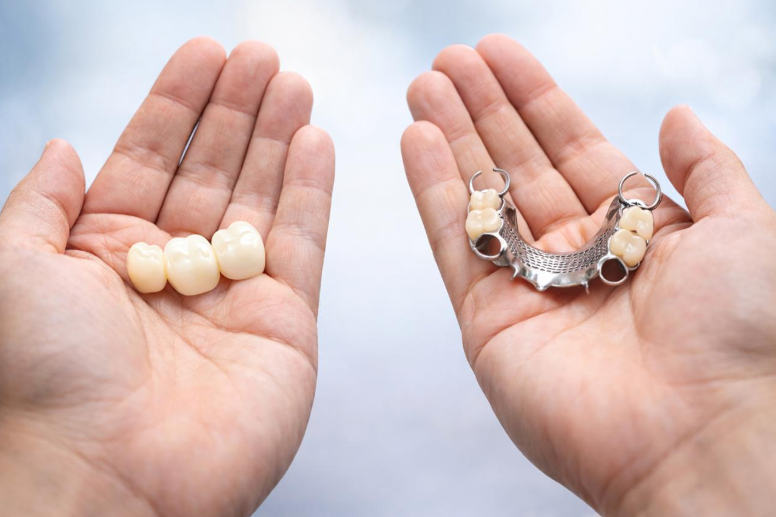
Replacing missing teeth involves more than choosing an option that fits your budget. The treatment should also consider the number and location of missing teeth, the condition of the surrounding teeth, oral health, maintenance needs, and personal preferences. Partial dentures and dental bridges are two options that may be discussed with a dental professional.
Understanding how their costs and requirements differ may help you prepare for a more informed conversation with a dentist in Kitchener.
What Are Partial Dentures?
Partial dentures are removable dental appliances that replace one or more missing teeth. They are designed to fit around existing teeth and may use clasps or other components to help maintain their position.
One reason some patients consider partial dentures is their removable design. They can generally be taken out for cleaning and at night, depending on the instructions provided by the dental professional.
The overall cost may depend on the number of teeth being replaced, the type of denture selected, the materials used, and whether additional dental treatment is required before the appliance is made. Partial dentures may also require adjustments over time. Changes in the mouth, wear, or damage can affect how the appliance fits.
What Are Dental Bridges?
A dental bridge replaces one or more missing teeth by connecting an artificial tooth to supporting teeth or other structures. Traditional bridges commonly rely on neighbouring teeth for support. Because a bridge remains in place, it does not need to be removed for daily use. However, cleaning underneath and around the bridge requires appropriate oral hygiene techniques.
The cost of a bridge can vary based on the type of bridge, the materials selected, the number of teeth involved, and the condition of the supporting teeth. If those teeth require treatment before the bridge is placed, this may add to the overall expense.
Which Option May Cost Less?
There is no single price comparison that applies to every patient. A partial denture may have a lower initial cost in some situations, while a bridge may involve a higher upfront expense because of the materials and procedures required.
However, the initial price is only one part of the financial decision. Maintenance, repairs, adjustments, replacement needs, and any preparatory dental work may also affect the total cost over time. Dental insurance coverage can further influence what a patient pays.
What About Other Dental Needs?
A dental assessment should consider more than the missing tooth itself. Gum health, tooth decay, bite alignment, and the condition of neighbouring teeth may influence which treatment options are appropriate. For patients exploring orthodontic concerns, searching for orthodontics in Kitchener may raise questions about how tooth positioning and bite affect restorative treatment.
A dental professional can determine whether further assessment is appropriate. If a tooth is suddenly lost because of an injury, severe pain, swelling, or another urgent problem, an emergency dentist in Kitchener may assess the situation and determine what care is needed.
Making a Budget-Conscious Decision
Partial dentures and dental bridges have different costs, maintenance requirements, and treatment processes. The most suitable option depends on individual oral health and circumstances rather than price alone.
A dental professional can explain the available choices, expected treatment steps, maintenance requirements, and estimated costs. Asking about both immediate and longer-term expenses may make it easier to compare the options.
Explore Your Tooth Replacement Options With Sante Family Dental!
At Sante Family Dental, patients can discuss concerns related to missing teeth and learn about restorative options based on their individual circumstances. A dental assessment may help clarify which treatments are appropriate and what costs may be involved before moving forward.